


- Your cart is empty Browse Shop
The Global Power of Indian Spices: A Comprehensive B2B Sourcing Guide
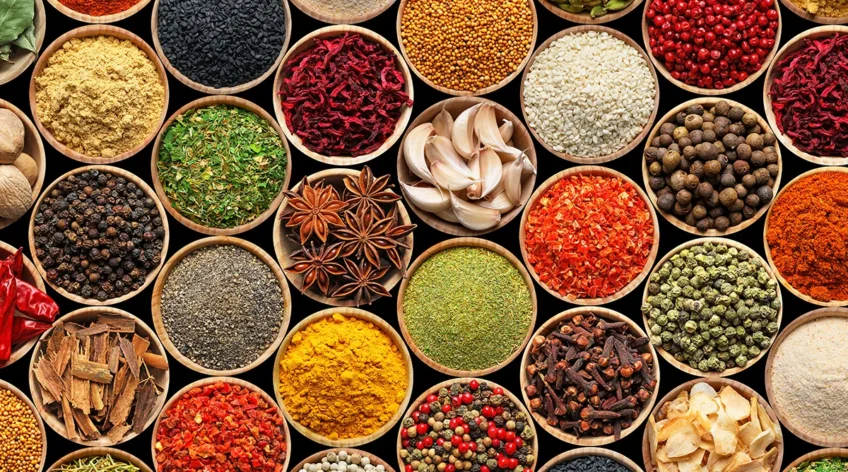
India has been known as the “Land of Spices” for millennia. From the ancient Silk Road to modern-day global trade routes, Indian spices have shaped economies, cultures, and cuisines. Today, India remains the world’s largest producer, consumer, and exporter of spices, accounting for nearly 70% of global spice production. At ajvac.in, we believe that understanding the intricate layers of this industry—from the fertile soils of the Western Ghats to the rigorous international quality benchmarks—is essential for any business looking to source premium commodities.
This guide explores the technical, geographical, and logistical factors that make Indian spices the gold standard in the global market.
1. The Geography of Flavor: Why Terroir Matters
The primary “trick” to the superiority of Indian spices lies in the diverse agro-climatic zones of the subcontinent. Nowhere is this more evident than in Kerala, particularly the Idukki and Wayanad regions.
- The Western Ghats Advantage: The high-altitude plantations of the Western Ghats offer a unique combination of heavy rainfall, rich loamy soil, and a cool, humid climate. This “terroir” is responsible for the high essential oil content in spices like black pepper and cardamom.
- Curcumin Content in Turmeric: While turmeric is grown across India, the varieties sourced from the southern hills often boast higher curcumin levels (frequently exceeding 5%), making them the preferred choice for the pharmaceutical and nutraceutical industries.
2. Black Pepper: The “Black Gold” of the B2B Market
Black Pepper (Piper nigrum) is the most traded spice in the world. For a B2B buyer, the focus isn’t just on heat, but on Piperine content.
- Malabar vs. Tellicherry: Tellicherry Bold (TGSEB) is world-renowned for its size and complexity. However, for industrial extraction, the density and piperine percentage of Malabar pepper are often more critical.
- Technical Tip: When sourcing in bulk, always request the “liter weight” (bulk density). A higher liter weight typically indicates a more mature berry with a higher yield for oleoresin extraction.
3. Cardamom: The Queen of Spices and the Art of Grading
Green Cardamom is perhaps the most sensitive spice in the supply chain. Its value is determined almost entirely by its physical appearance and the retention of its volatile oils.
- Grading by Diameter: In the professional market, cardamom is graded by millimeter size (6mm, 7mm, 8mm). The “8mm Bold” is the premium tier, prized for its aesthetic and intense aroma.
- Processing Precision: The “trick” to vibrant green cardamom is the drying process. At ajvac, we emphasize the importance of traditional smoke-free drying kilns that preserve the natural chlorophyll while reducing moisture to a stable 10-12%.
4. Turmeric: Beyond the Color
In the B2B sector, turmeric is no longer just a coloring agent; it is a high-value bioactive ingredient.
- Processing Excellence: The traditional “boiling and drying” method must be executed with precision. Over-boiling can lead to a loss of curcumin, while under-drying can lead to fungal growth during bulk storage.
- Finger vs. Powder: For international trade, sourcing “Turmeric Fingers” is often safer than powder, as it allows the buyer to verify the physical integrity and purity of the rhizome before grinding.
5. The Critical Role of Quality Assurance and Certifications
Navigating the Indian spice market requires a deep understanding of international safety standards. A shipment is only as good as its lab report.
- Pesticide Residue & Contaminants: The EU and US-FDA have stringent MRLs (Maximum Residue Levels). B2B buyers must prioritize suppliers who utilize Steam Sterilization rather than chemical fumigation (like Ethylene Oxide) to meet microbial safety standards without compromising flavor.
- Key Certifications: Look for HACCP, ISO 22000, and Spices Board of India certifications. These are the markers of a facility that understands global food safety compliance.
6. Logistical Integrity: Preserving Aroma During Transit
The greatest risk in the spice trade occurs after the product leaves the warehouse. Spices are “hygroscopic”—they absorb moisture from the air.
- Packaging Solutions: For bulk exports, multi-layer kraft paper bags or HDPE bags with inner liners are essential. For high-value spices like cardamom, vacuum packaging is the gold standard to prevent the oxidation of essential oils.
- The “Container Sweat” Problem: When shipping from the humid ports of India to cooler climates (like Europe or North America), temperature fluctuations can cause condensation inside the container. Tip: Use high-absorption desiccant bags and ensure proper ventilation to prevent mold.
7. The Economic Impact of the “Middle-Man”
In the traditional Indian spice market, a product often passes through five or six hands before reaching the exporter. Each step increases cost and decreases traceability.
- The Direct Sourcing Model: At ajvac.in, we champion a direct-from-farm or direct-from-auction model. This ensures that a higher percentage of the price goes back to the farming communities in Idukki and Palakkad, while providing the B2B buyer with a “clean” supply chain and full traceability.
8. Market Trends: The Rise of Organic and Sustainable Spices
The global B2B landscape is shifting toward “Clean Label” products.
- Sustainability: Buyers are increasingly asking for “Carbon Footprint” data and proof of sustainable farming. In India, many traditional farming methods are inherently organic, but getting the official NOP/NPOP certification is the bridge to the premium global market.
- Traceability Technology: The use of QR codes and blockchain in spice sourcing is no longer a futuristic concept. Being able to trace a bag of pepper back to a specific cluster of farms in Kerala is a massive competitive advantage for modern brands.
9. Bulk Sourcing Strategies: Hedging Against Volatility
Spice prices are notoriously volatile, influenced by everything from monsoon patterns to international currency fluctuations.
- Long-term Contracts: For large-scale food processors, “Spot Buying” (buying at the current market price) is risky. We recommend a mix of spot buying and forward contracts to stabilize the “Cost of Goods Sold” (COGS).
- Buffer Stocking: Utilizing the massive storage capacities of partners like ajvac.in allows businesses to lock in prices during the harvest season (January to March for most spices) and draw from that stock throughout the year.
10. Conclusion: The Future of the Spice Trade
The Indian spice industry is undergoing a digital and technical revolution. While the soul of the industry remains in the small, sun-drenched plots of Kerala’s farmers, the operations are now driven by automated sorting, steam sterilization, and global logistics.
For the B2B buyer, success lies in finding a partner who respects the heritage of these “botanical treasures” while speaking the language of modern food science and international trade. Whether it is the bite of a black pepper corn or the golden glow of turmeric, Indian spices continue to be the pulse of the global food industry.